
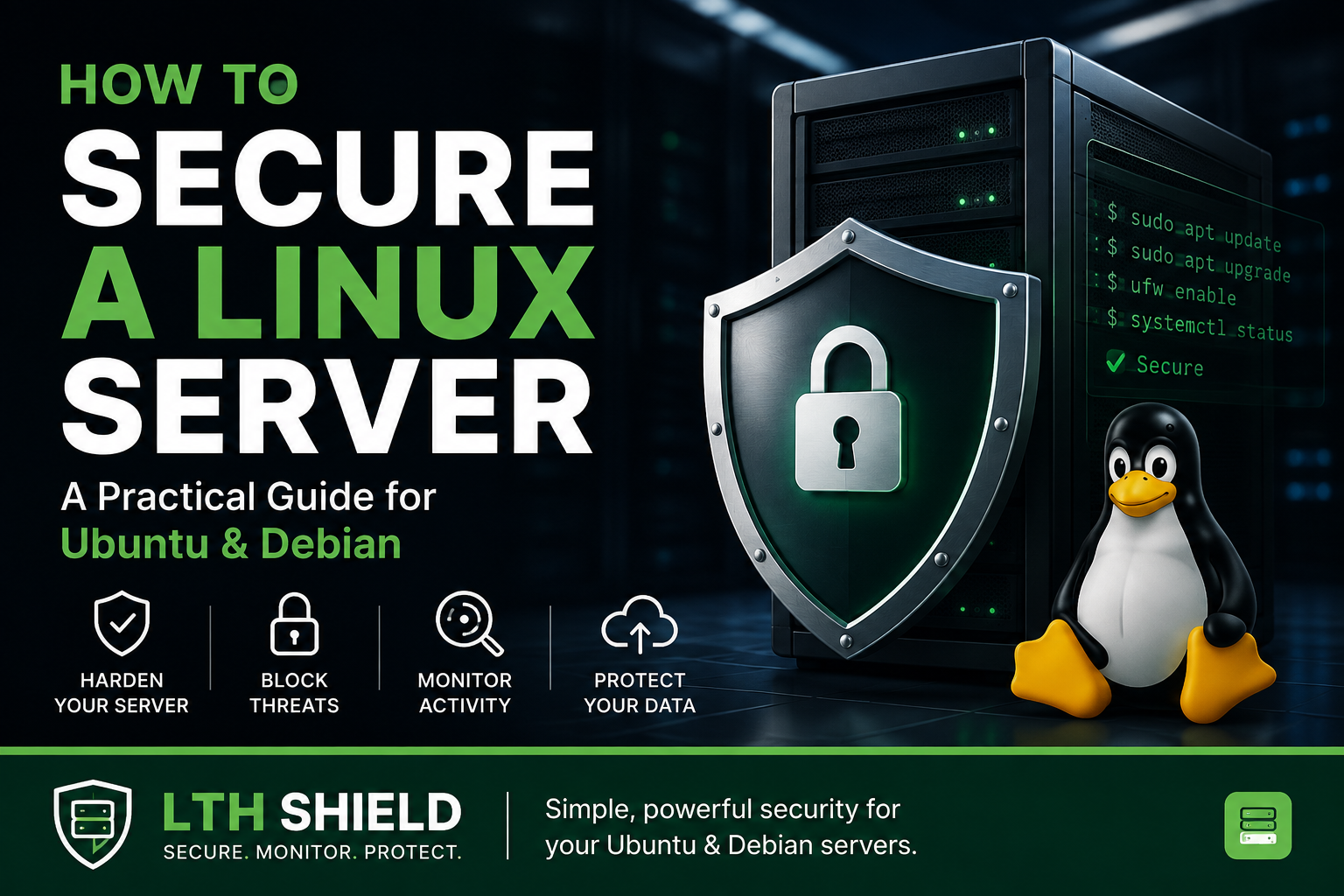
Secure Your VPS Fast: Automated Linux Hardening for Ubuntu & Debian Servers
Launching a Linux server today is unbelievably easy. In just a few minutes, you can deploy an Ubuntu or Debian VPS on DigitalOcean, Hetzner, Vultr, AWS, Azure, or any other cloud provider. The entire process has become so streamlined that spinning up a fresh VPS feels almost trivial.
And that’s exactly where people get blindsided.
Cloud providers talk a lot about enterprise security, DDoS protection, secure infrastructure, and isolated environments. Those features sound reassuring, and they do protect the provider’s platform — but they don’t secure your server. Once your VPS is online, it’s exposed to the same internet as everything else, and the internet doesn’t wait politely for you to finish configuring it.
The moment your server goes live, it starts receiving traffic. Not real users — bots.
Automated bots constantly scan IP ranges looking for servers that were deployed quickly and secured slowly. They don’t care who you are. They don’t care what your application does. They don’t even care if your server is empty. They’re just looking for weak SSH settings, open ports, outdated packages, and anything they can exploit.
This is the part most people never see. Your server is being tested long before your first customer ever visits it.
Linux itself is solid. The problem is that a fresh VPS needs real hardening, and most developers underestimate how many small but important steps are involved. Before a Linux server goes live, you should be thinking about things like:
- SSH security — because brute‑force attacks start immediately
- Firewall exposure — because default configurations often expose more than you expect
- Automatic updates — because unpatched software is the easiest target
- File integrity — because attackers rarely announce themselves
- Meaningful alerts — because silent failures are the most dangerous kind
None of these tasks are complicated. But they’re easy to skip when your priority is launching your application, not babysitting infrastructure.
And that’s the real problem: Speed of deployment has outpaced the habits of secure deployment.
Developers spin up a VPS, install their stack, confirm it works, and move on. Weeks later they realize they never enabled Fail2ban, never configured file integrity monitoring, never set up alerts, and never revisited the firewall. The server keeps running, but no one really knows what’s happening on it.
This is exactly why we built LTH Shield.
Instead of manually hardening every new VPS, LTH Shield gives you a secure baseline with almost no friction. One installation command and your server immediately gets:
- Proper hardening for Ubuntu or Debian
- SSH brute‑force protection with Fail2ban
- File Integrity Monitoring so you know instantly if an attacker creates or edits a file
- Real security alerts instead of silent compromises
- A central dashboard so you don’t have to log into each server individually
- Optional AI‑powered Snort intrusion prevention for deeper visibility
File Integrity Monitoring is one of the most important pieces. If someone modifies your web files, changes a configuration, drops a malicious script, or tampers with your system, you shouldn’t discover it during a routine audit weeks later. You should know the moment it happens. That’s the difference between catching an intrusion early and dealing with a full compromise.
The goal of LTH Shield isn’t to replace good security practices — it’s to make them effortless. You still need to understand why hardening matters, but you shouldn’t have to spend hours repeating the same setup every time you deploy a VPS.
Deploying servers is easy now. Securing them should be just as easy.
If you want a faster, more reliable way to harden your Ubuntu or Debian VPS, monitor for suspicious changes, and reduce the workload of Linux security, try LTH Shield and see how quickly you can go from a fresh VPS to a hardened one.
Sign up here: https://portal.lthcybersecurity.com/register